
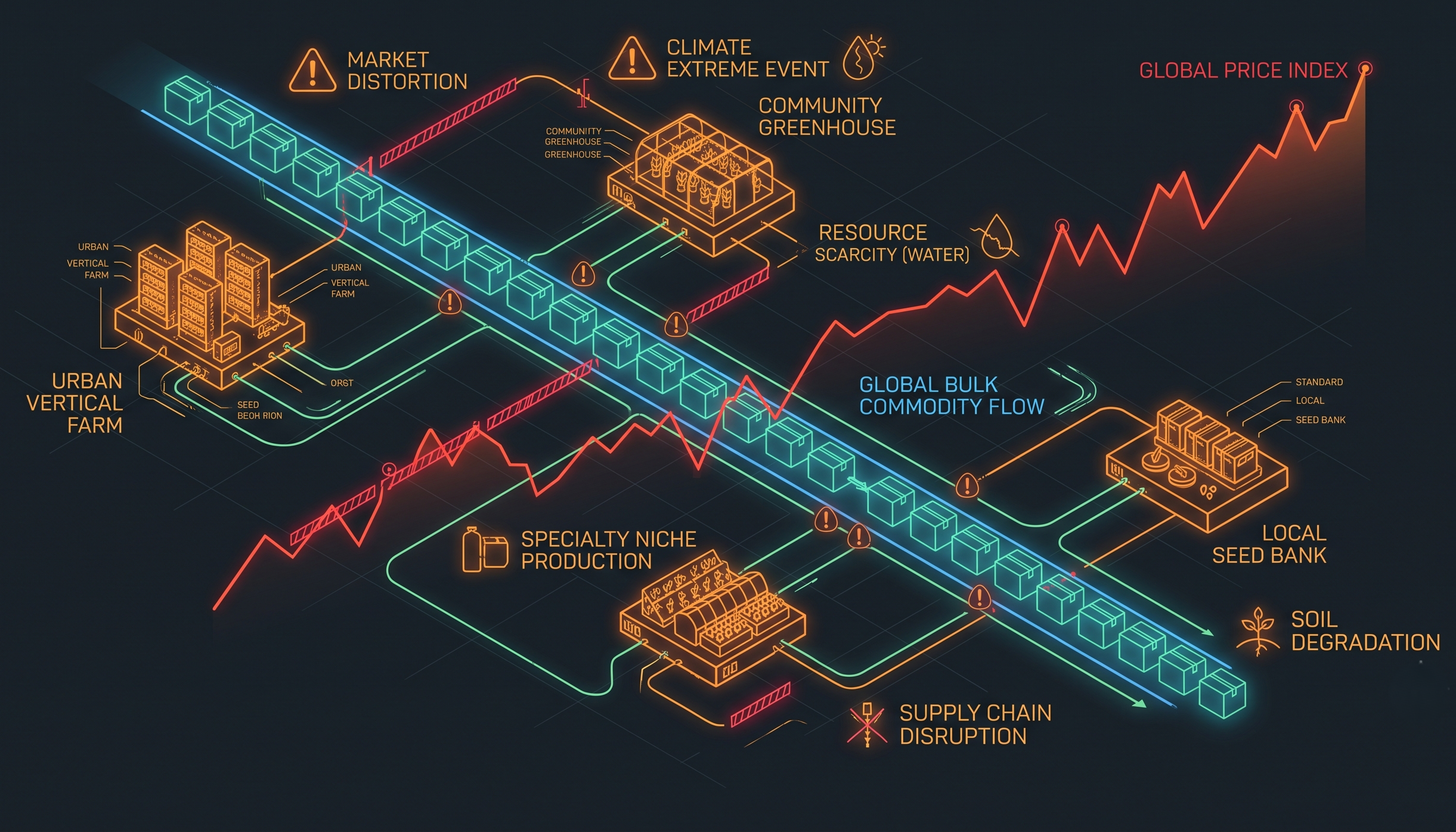
This phenomenon is determined by a variety of underlying factors and is linked to specific current triggers. The steadily growing global population, rising consumer demand in emerging economies, as well as soil degradation and the depletion of water resources for irrigation are indisputable facts that cannot be put into perspective. The long-term effects of climate change are a matter of debate; however, the frequency of extreme weather events caused by climate change is not the sole cause of global food insecurity. Urgent short-term consumer needs and long-term impacts of unsustainable agricultural, forestry and fishing practices reduce the regenerative capacity of fauna and flora, the atmosphere, soils and water resources.
Needs and options must be weighed up scientifically, taking into account socio-economic and environmental factors. In the future, micro-systems in food production must be revived and modified to complement the food trade system. Subsistence farming makes sense not only in rural but also in urban regions. The niche production of agricultural specialties in high-income countries for local markets and for export is also recommended. The fact is, however, that free trade in primary products is of existential importance for the global food supply, industrial production and ultimately for stability and peace.
ELEPH-ANTS therefore focuses its attention primarily on homogeneous and classifiable renewable products that can be stored, traded and transported in large quantities at low cost and with an acceptable carbon footprint. Relatively few large surplus producing countries supply a large number of import-dependent countries with these primary bulk commodities. Furthermore, today’s markets are distorted by certain forms of speculation, protectionist measures and conflicts – all to the detriment of consumers with low purchasing power, small producers, the ecosystem and the welfare of farm animals.
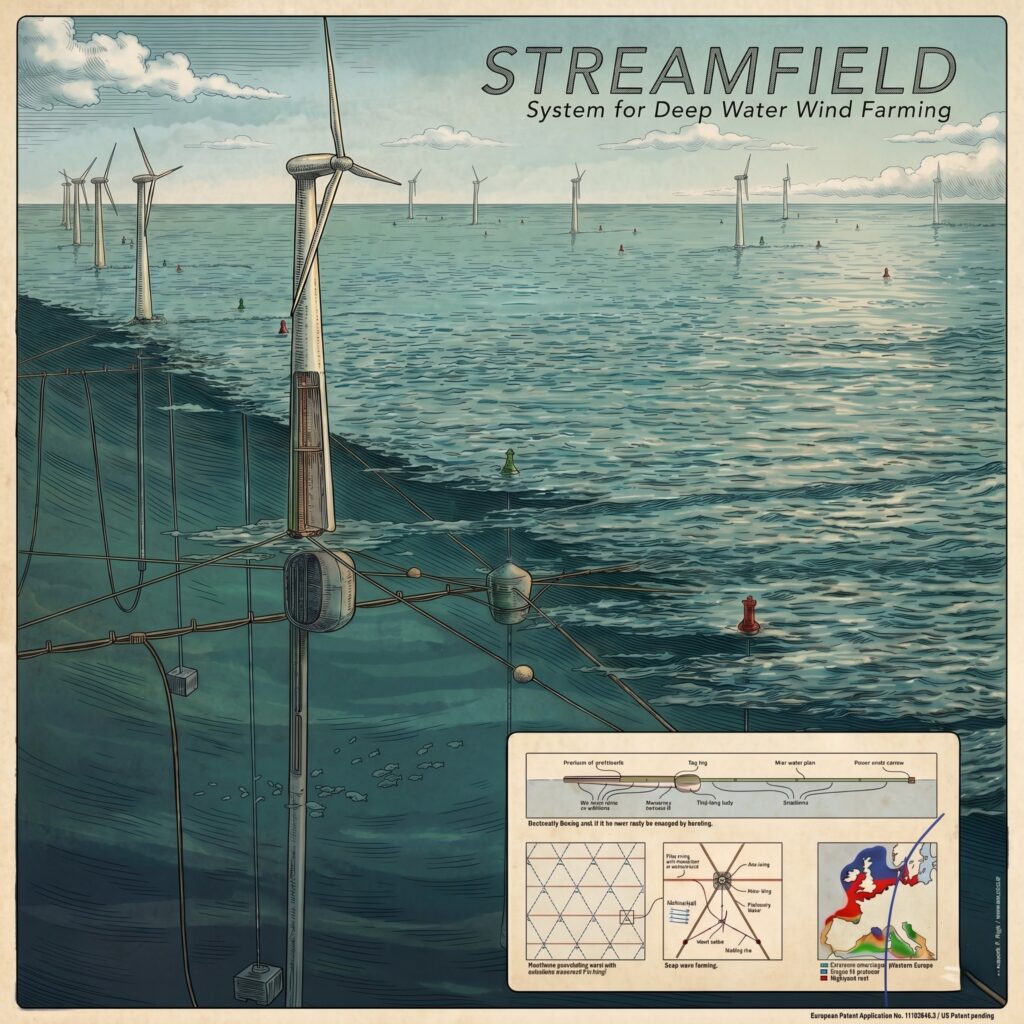 Although solar, hydro and wind power are being massively expanded in China and Western countries, the immense global energy consumption is still largely based on limited fossil resources and on nuclear energy. The use of fossil fuel is damaging to the climate and nuclear energy is associated with the risks of accidents and long-term consequences as in Three Mile Island, Chernobyl and Fukushima. Potentially less hazardous and more environmentally friendly thorium reactors (VI generation) are still in the experimental phase. An orientation towards naturally available but consistently renewable sources of energy is taking place. It is a planetary imperative that calls for adaption of applied technologies and investment in new ones. Energy efficiency must be improved, whilst at the same time energy must be saved (rather than falling into the trap of rebound effects).
Our oceans are overfished, polluted, acidified, warming up and suffering from increasing oxygen depletion in some regions. In the very worst-case scenario (let’s paint the devil on the wall for once), the combination of these problems could lead to far-reaching damage to marine life, comparable only to similar phenomena that occurred 65 million years ago and earlier. However, recent research also shows that the oceans can be harnessed as inexhaustible sources of mechanical and thermal energy. If this is done intelligently, it can help to replace climate-damaging fossil fuels. Vast areas of the North Atlantic could theoretically supply Western Europe with energy from waves, tides and, in particular, wind – practically all year round. However, storing surplus energy from marine sources, transmitting it and ensuring grid stability in the face of fluctuating generation levels present an enormous challenge.
Although solar, hydro and wind power are being massively expanded in China and Western countries, the immense global energy consumption is still largely based on limited fossil resources and on nuclear energy. The use of fossil fuel is damaging to the climate and nuclear energy is associated with the risks of accidents and long-term consequences as in Three Mile Island, Chernobyl and Fukushima. Potentially less hazardous and more environmentally friendly thorium reactors (VI generation) are still in the experimental phase. An orientation towards naturally available but consistently renewable sources of energy is taking place. It is a planetary imperative that calls for adaption of applied technologies and investment in new ones. Energy efficiency must be improved, whilst at the same time energy must be saved (rather than falling into the trap of rebound effects).
Our oceans are overfished, polluted, acidified, warming up and suffering from increasing oxygen depletion in some regions. In the very worst-case scenario (let’s paint the devil on the wall for once), the combination of these problems could lead to far-reaching damage to marine life, comparable only to similar phenomena that occurred 65 million years ago and earlier. However, recent research also shows that the oceans can be harnessed as inexhaustible sources of mechanical and thermal energy. If this is done intelligently, it can help to replace climate-damaging fossil fuels. Vast areas of the North Atlantic could theoretically supply Western Europe with energy from waves, tides and, in particular, wind – practically all year round. However, storing surplus energy from marine sources, transmitting it and ensuring grid stability in the face of fluctuating generation levels present an enormous challenge.